 Save
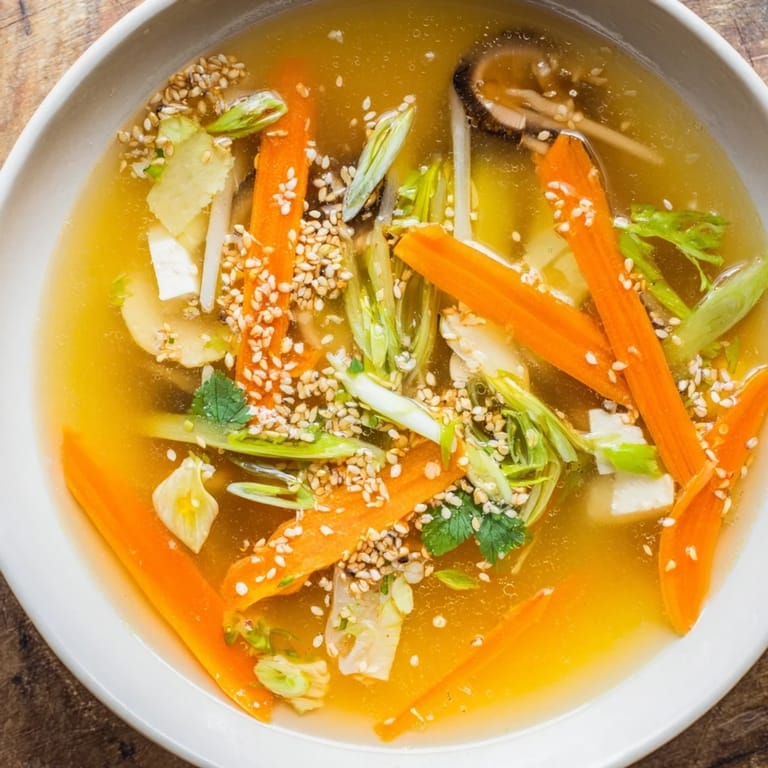
Save The first time I made this soup was during a particularly brutal February when my apartment felt like it was never going to be warm again. I had a piece of ginger that was starting to look sad in the crisper drawer and a jar of miso paste I had bought on impulse months earlier. Something about simmering ginger on the stove just makes the whole house feel different, like you are somehow protected from whatever weather is happening outside. Now it is the soup I make whenever someone needs taking care of, including myself.
Last winter my neighbor came over complaining that she felt like she was getting sick and I put a pot of this on immediately. We sat at my kitchen table wrapped in blankets while the ginger scent filled every corner of the apartment. She took one sip and literally closed her eyes, then asked for the recipe before she even finished the bowl. Now every time she smells ginger cooking she sends me a text asking if I am making the magic soup again.
Ingredients
- Water or vegetable broth: I usually use water because the miso provides so much depth already but broth is nice if you want extra richness
- Fresh ginger: Do not peel it thinly just give it a rough scrub and slice it into coins that will release their flavor into the broth
- Garlic cloves: Slice them thinly so they infuse the liquid without leaving harsh raw garlic bites in your soup
- White or yellow miso paste: White is milder and sweeter while yellow has more depth but either will work beautifully here
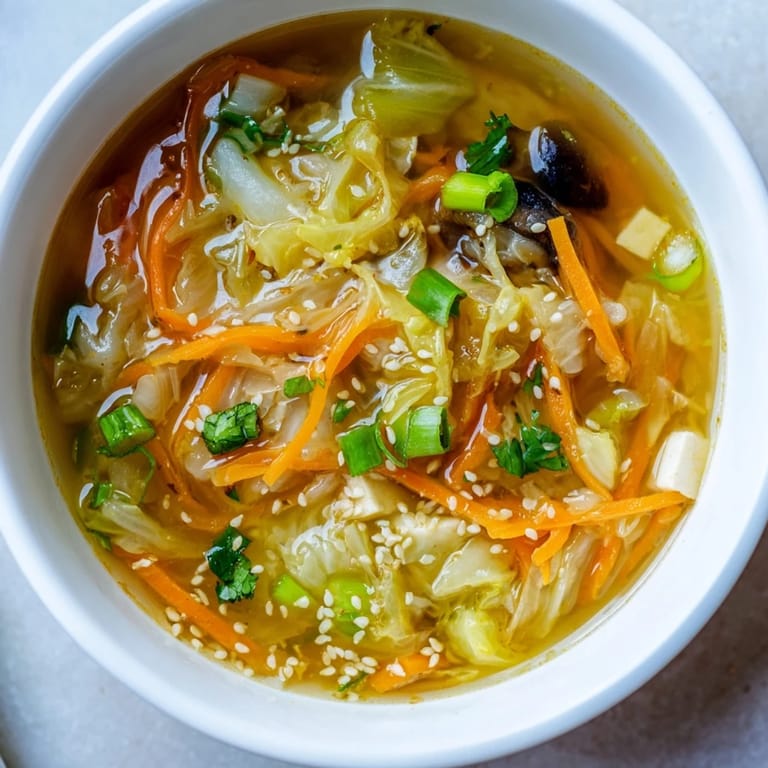
- Napa cabbage: It becomes silky and tender in the broth absorbing all that ginger miso flavor
- Carrot: Julienned into thin ribbons they cook quickly and add a lovely sweetness and color
- Shiitake mushrooms: They bring an earthy meaty quality that makes this feel substantial even without meat
- Scallions: Both the white and green parts add fresh bite and color as a garnish
- Toasted sesame seeds: They add a nutty crunch that contrasts beautifully with the silky broth
- Fresh herbs: Cilantro or parsley brightens everything and makes it feel finished
- Chili oil or flakes: Just enough warmth to make you sit up and take notice without overwhelming the delicate flavors
- Silken tofu: If you want more protein it slips into the broth like little clouds
- Soba or rice noodles: Turn this from a light soup into a proper meal in a bowl
Tired of Takeout? 🥡
Get 10 meals you can make faster than delivery arrives. Seriously.
One email. No spam. Unsubscribe anytime.
Instructions
- Build the broth foundation:
- Bring your water or vegetable broth to a gentle bubble then slide in those ginger coins and garlic slices. Let them work their magic for about ten minutes until your kitchen starts to smell like a spa and the broth looks slightly golden.
- Add the vegetables:
- Toss in the cabbage carrot ribbons and mushroom slices. Simmer until the cabbage has collapsed into silky ribbons and the carrots are tender but still have a bit of snap about five to seven minutes.
- Temper the miso:
- This is the important part so listen closely. Scoop out some of the hot broth into a small bowl and whisk your miso paste into it until it is completely smooth. Pour this back into the soup and stir gently but never let it boil again or you will lose all those beneficial probiotics that make miso so special.
- Add your extras and finish:
- If you are using tofu or noodles slide them in now just to warm through. Ladle into bowls and scatter scallions sesame seeds herbs and that little hit of chili oil over the top. Serve immediately while it is still steaming.
 Save
Save This soup has become my go to when I cannot decide what to eat but I know I need something that will make me feel better from the inside out. There is something almost meditative about standing over the pot inhaling the ginger steam as it simmers.
Making It Your Own
I have made this soup with whatever vegetables I had on hand and it has never let me down. Bok choy works just as well as napa cabbage and sometimes I add spinach at the very end just to wilt it into the broth. Daikon radish adds a lovely peppery bite that plays nicely against the sweet ginger.
The Noodle Question
Soba noodles are my favorite addition because they have such a nutty flavor that complements the miso but rice noodles work beautifully if you need it to be gluten free. Just cook them separately and add them to your bowls before ladling the soup over so they do not get mushy.
Leftovers And Storage
This soup keeps beautifully in the refrigerator for three to four days but leave out any noodles or tofu if you are planning to store it. Reheat gently over low heat and add fresh miso at the end if it seems to have lost some of its punch.
- The broth actually gets better after a day or two in the fridge as the ginger and miso flavors deepen
- If you are freezing this soup leave out the cabbage and add it fresh when you reheat or it will become unpleasantly mushy
- A splash of fresh lemon juice right before serving wakes everything up beautifully
 Save
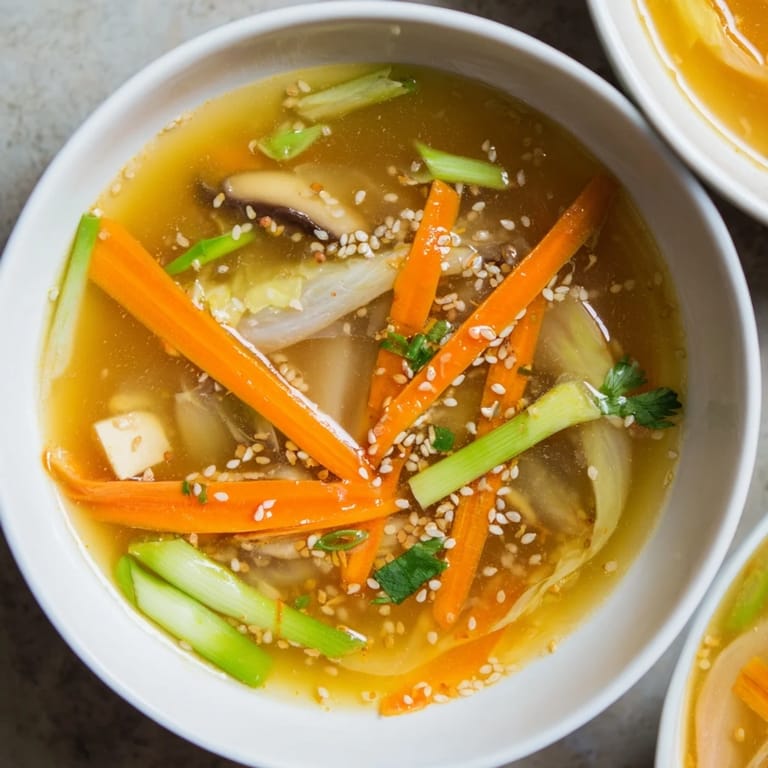
Save There is something so restorative about a bowl of this soup on a cold day. It feels like a gentle reminder that sometimes the simplest things are exactly what we need.
Recipe Help
- → Why shouldn't I boil miso?
Boiling miso destroys beneficial probiotics and can make the flavor bitter. Always dissolve miso in hot liquid off the heat, then stir it back into the soup just before serving.
- → Can I make this ahead of time?
Prepare the vegetable broth base up to 2 days in advance. Add miso and fresh garnishes just before serving for the best flavor and texture.
- → What vegetables work best?
Napa cabbage, shiitakes, and carrots are classic choices. Bok choy, spinach, daikon radish, or enoki mushrooms also work beautifully in this warming broth.
- → Is this gluten-free?
Traditional miso and soy sauce contain gluten. Use certified gluten-free miso and tamari instead of soy sauce. Skip soba noodles unless they're specifically buckwheat-based.
- → How do I store leftovers?
Refrigerate in an airtight container for up to 3 days. Reheat gently without boiling—add fresh miso paste before serving to restore probiotic benefits.
- → Can I add protein?
Silken tofu adds creamy protein without overpowering delicate flavors. For heartier options, try cubed firm tofu, edamame, or shredded cooked chicken.