 Save
Save There's something about November that makes me crave a pot of minestrone, especially the kind loaded with butternut squash that turns almost translucent as it softens in the broth. My neighbor Marco once told me the secret to good minestrone isn't following rules—it's listening to what your kitchen smells like and knowing when to stop fussing with it. That stuck with me, and now when I make this version, I think of his kitchen on rainy afternoons, steam rising from a pot that seemed to hold the entire season inside it.
I made this soup the first time for my daughter's school lunch group, back when she was convinced homemade meant it had to taste like restaurant food. When she tasted it straight from the ladle, she got quiet in that way kids do when they're deciding if they like something, then asked for seconds. Now she requests it by name, and I've learned that real food—the kind that doesn't announce itself—sometimes wins people over more quietly than anything else could.
Ingredients
- Olive oil: Use a good quality one you'd actually drink—it's not hidden here, and it carries the flavor of everything that comes after.
- Yellow onion, carrots, and celery: This is your aromatic foundation, and dicing them evenly means they soften at the same rate, which I learned after too many mushy carrots and crunchy celery.
- Garlic: Mince it fine so it dissolves into the broth rather than sitting as little chunks; this changes the whole character of the soup.
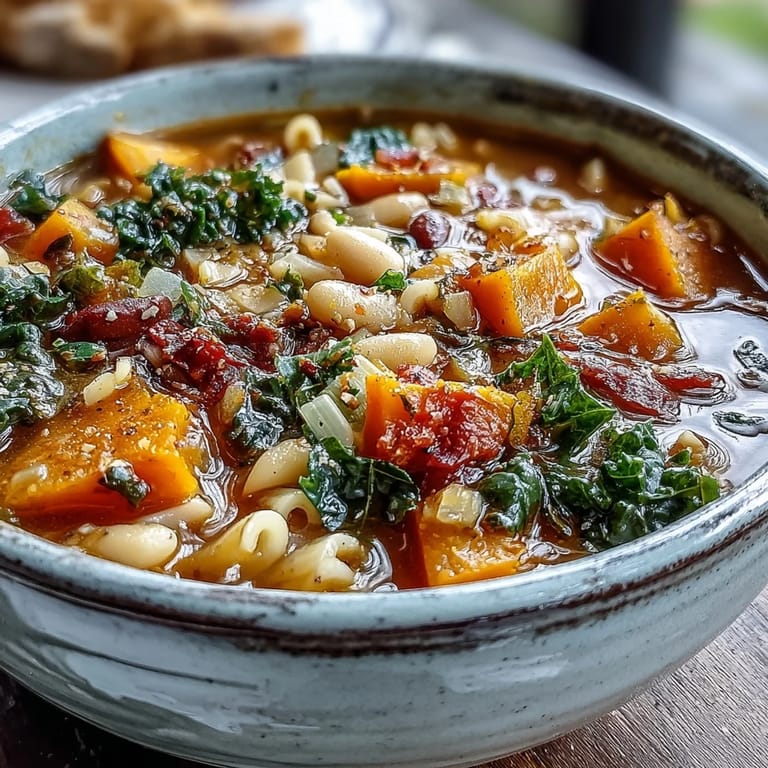
- Butternut squash: Buy one that feels heavy for its size, peel it while it's slightly cool (warm squash is slippery), and cut it into roughly half-inch cubes so they break down but don't disappear.
- Zucchini: Summer squash adds body without overwhelming the other flavors, and it'll soften quickly, so don't add it too early.
- Fresh kale: Strip it from the stems—those are bitter and woody—and chop it roughly so it doesn't turn into paste when wilted.
- Diced tomatoes: Canned is fine here; the juice matters as much as the fruit.
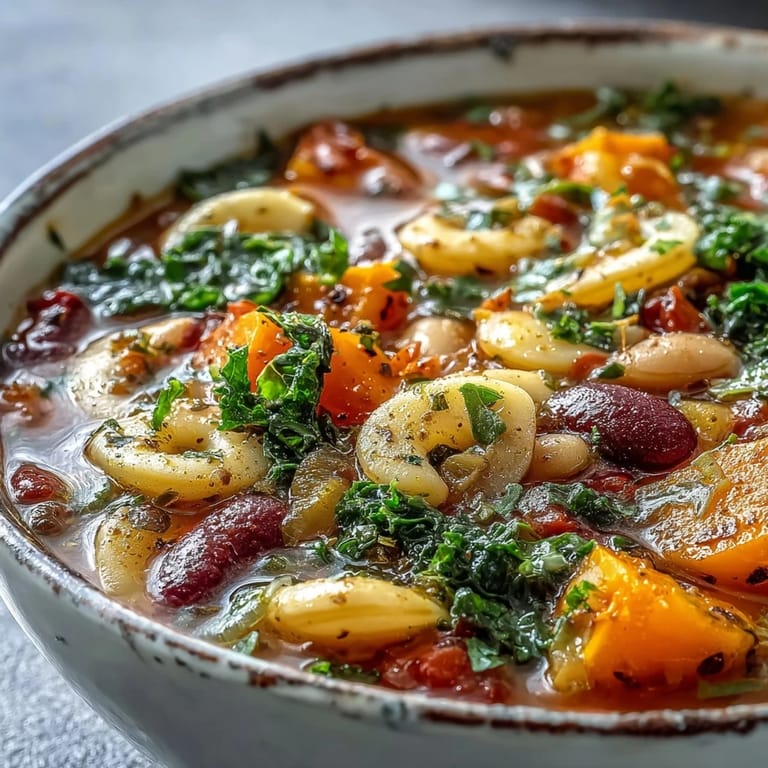
- Cannellini beans: Drain and rinse them even though it feels fussy, because the starch coating makes the broth cloudy if you skip it.
- Small pasta: Ditalini or small shells work best because they don't overwhelm the vegetables and they're done cooking at the same moment the squash is tender.
- Vegetable broth: A low-sodium one gives you control over seasoning as the soup develops.
- Dried herbs: Oregano, thyme, and rosemary together create that Italian backbone, and dried is actually better here than fresh because it diffuses more evenly.
- Red pepper flakes: Optional but worth the quarter teaspoon—it adds a whisper of heat that makes you notice all the other flavors.
- Fresh parsley: Stir it in right at the end so it stays bright green and fresh tasting.
Tired of Takeout? 🥡
Get 10 meals you can make faster than delivery arrives. Seriously.
One email. No spam. Unsubscribe anytime.
Instructions
- Build your base:
- Heat olive oil in a large pot over medium heat, then add onion, carrots, and celery. Sauté for five to six minutes, stirring often, until the onion turns translucent and everything softens—you'll know it's ready when your kitchen suddenly smells like a proper kitchen. This isn't the time to rush.
- Wake up the garlic:
- Stir in minced garlic and cook for exactly one minute until it's fragrant but not brown. Burnt garlic tastes bitter and there's no fixing it, so watch closely.
- Add the squash:
- Add butternut squash and zucchini to the pot and cook for four to five minutes, stirring occasionally so the pieces soften at the edges but don't break apart. You're coaxing flavor, not smashing anything.
- Pour in the broth and tomatoes:
- Add diced tomatoes with their juices, vegetable broth, and water, then bring everything to a boil over medium-high heat. Once it's bubbling, you're officially in the simmering stage.
- Simmer with herbs:
- Stir in oregano, thyme, rosemary, and red pepper flakes if using, then reduce heat to medium-low and let it simmer uncovered for fifteen minutes. The soup will deepen in color and the squash will start to soften but still hold its shape.
- Add beans and pasta:
- Stir in cannellini beans and pasta, then simmer for another eight to ten minutes, stirring occasionally so the pasta doesn't stick. The squash should be tender enough to break with a spoon but not mushy.
- Finish with kale:
- Add chopped kale and cook for two to three minutes, stirring gently, until it's bright green and wilted. This is when the soup transforms from good to something you'll crave again.
- Season and serve:
- Taste as you go and adjust salt and pepper until it tastes like you're tasting it. Remove from heat, stir in fresh parsley, and ladle into bowls, topping with grated Parmesan if you'd like.
 Save
Save One winter afternoon when the power went out, I'd already started this soup on the stove, and we finished it by candlelight, the whole family huddled around the kitchen island with their bowls, talking more than they usually do. It wasn't fancy, but it felt like the kind of moment people remember, and I realized then that minestrone isn't just soup—it's permission to slow down and show up for people who matter.
The Secret of Butternut Squash in Soup
Butternut squash has a natural sweetness that develops as it cooks, and in a savory broth it creates this perfect balance where you don't taste sugar but you feel cared for. The flesh also breaks down slightly at the edges, thickening the broth without any cream or flour, which is why minestrone feels luxurious even though it's essentially vegetables and beans. I learned this by accident when I once forgot the cream I'd planned to add and realized the soup didn't need it—the squash had already done the work.
Timing and Texture
The hardest part of this soup isn't the cooking, it's the waiting, because everything wants to be added at different times and you have to trust that the sequence works. Vegetables release water as they cook, so don't worry if the soup looks thin halfway through—it'll thicken as it simmers. I usually set a timer for each stage and sit nearby with my coffee, and by the time everything comes together, the whole house smells like November.
Variations and Adaptations
This soup is forgiving enough to adapt based on what's in your kitchen or what you're craving that day. Some days I add a splash of balsamic vinegar in the last minute, and other days I throw in a handful of spinach instead of kale, or swap the beans for chickpeas if that's what I have. The core of it—the squash, the aromatics, the herbs—stays the same, and that's what makes it reliable enough to turn to on gray afternoons.
- For a vegan version, skip the Parmesan or use a dairy-free alternative that melts into the hot soup.
- A Parmesan rind simmered with the broth adds savory depth—just remember to fish it out before serving.
- Pair it with crusty bread and a crisp white wine like Pinot Grigio, or just serve it with something warm and carb-heavy because this soup asks for it.
 Save
Save This soup has become my answer to a lot of questions—what to make when someone's had a bad day, what to bring to a friend, what to cook when I want my kitchen to smell like comfort. It asks for about an hour of your time but gives back so much more.
Recipe Help
- → Can I make this soup vegan?
Yes, simply omit the Parmesan cheese or use a dairy-free alternative. The soup remains flavorful and satisfying without it.
- → Can I freeze leftovers?
Yes, but freeze without the pasta as it can become mushy. Add fresh pasta when reheating, or enjoy the soup without grains.
- → What other greens work well?
Spinach, Swiss chard, or escarole make excellent substitutes for kale. Add them near the end of cooking just until wilted.
- → Can I use different beans?
Kidney beans, chickpeas, or great northern beans all work beautifully. The creamy texture complements the vegetables perfectly.
- → How do I add more depth?
Simmer a Parmesan rind in the broth during cooking, then remove before serving. This infuses rich umami flavor throughout.
- → What pasta shape works best?
Ditalini, elbow macaroni, or small shells are ideal. Their size fits well on spoons and holds the thick broth nicely.